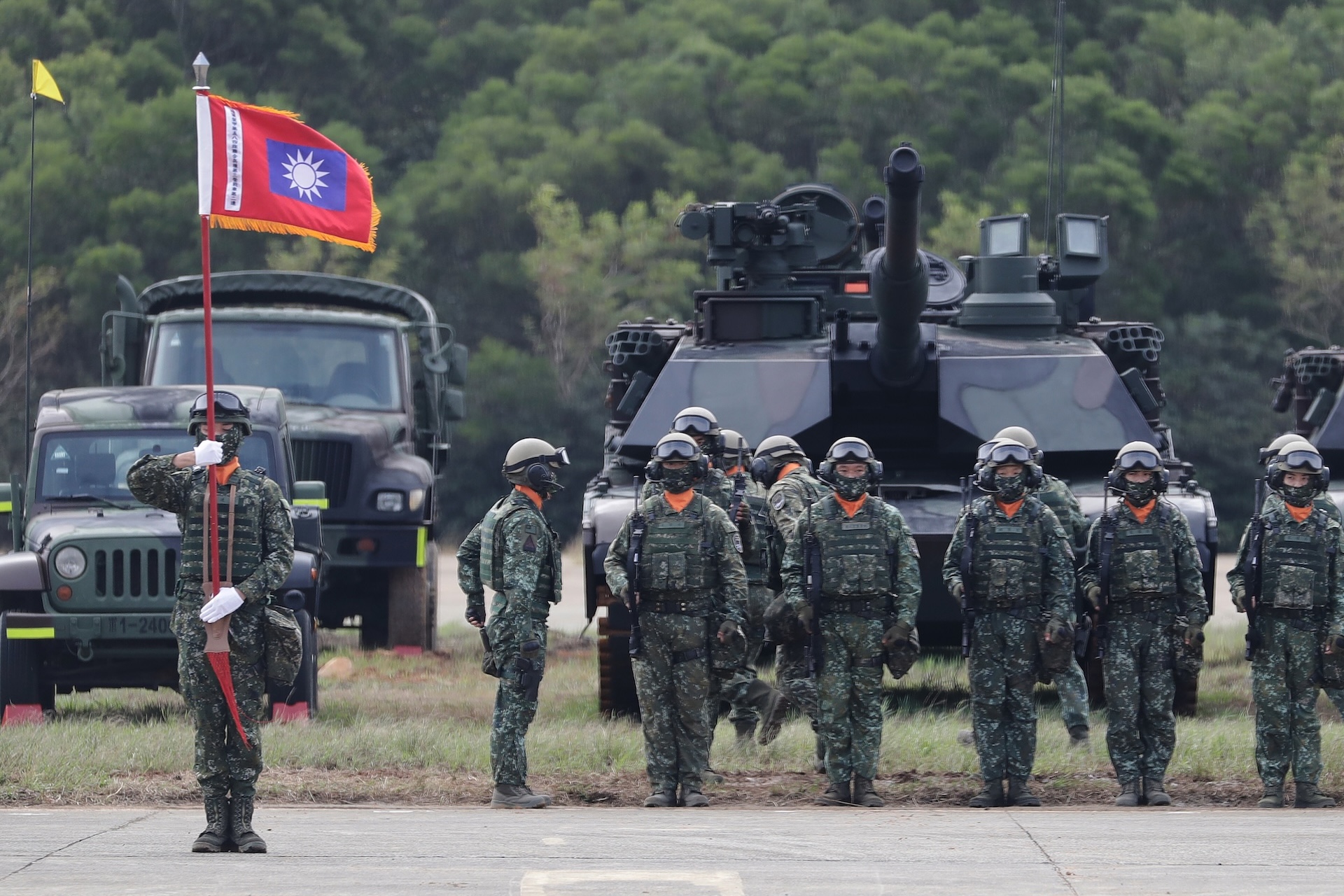
In an op-ed for the Washington Post in late November, Taiwanese President Lai Ching-te declared, “I will boost defense spending to protect our democracy.” Calling out “an unprecedented military buildup by Beijing”—which has vowed to bring Taiwan under its control, without ruling out the use of force—Lai announced that his government would introduce a historic supplemental defense budget of 1.25 trillion Taiwan dollars, or $40 billion. Citing foundational texts of U.S.-Taiwan relations, including the 1979 Taiwan Relations Act and the 1982 Six Assurances, Lai underscored the importance of collaborating with U.S. President Donald Trump’s administration to “uphold the cross-strait status quo.”
The proposed new special defense budget is a sea change in Taiwan’s strategic posture. It aims to address decades of chronic underinvestment in its own defense by raising its military budget from next year’s 3.3 percent of GDP to a 5 percent baseline by 2030. It also seeks to secure multi-year asymmetric military capabilities that could transform the Taiwan Strait into a “hellscape” for China’s military should it attempt an invasion.
It also comes amid the Trump administration’s heightened expectations that Taiwan share the burden of its own defense, as reflected in its America First policies and its new National Security Strategy. Raymond Greene, the de facto U.S. ambassador in Taipei, has underscored these expectations in his public comments.